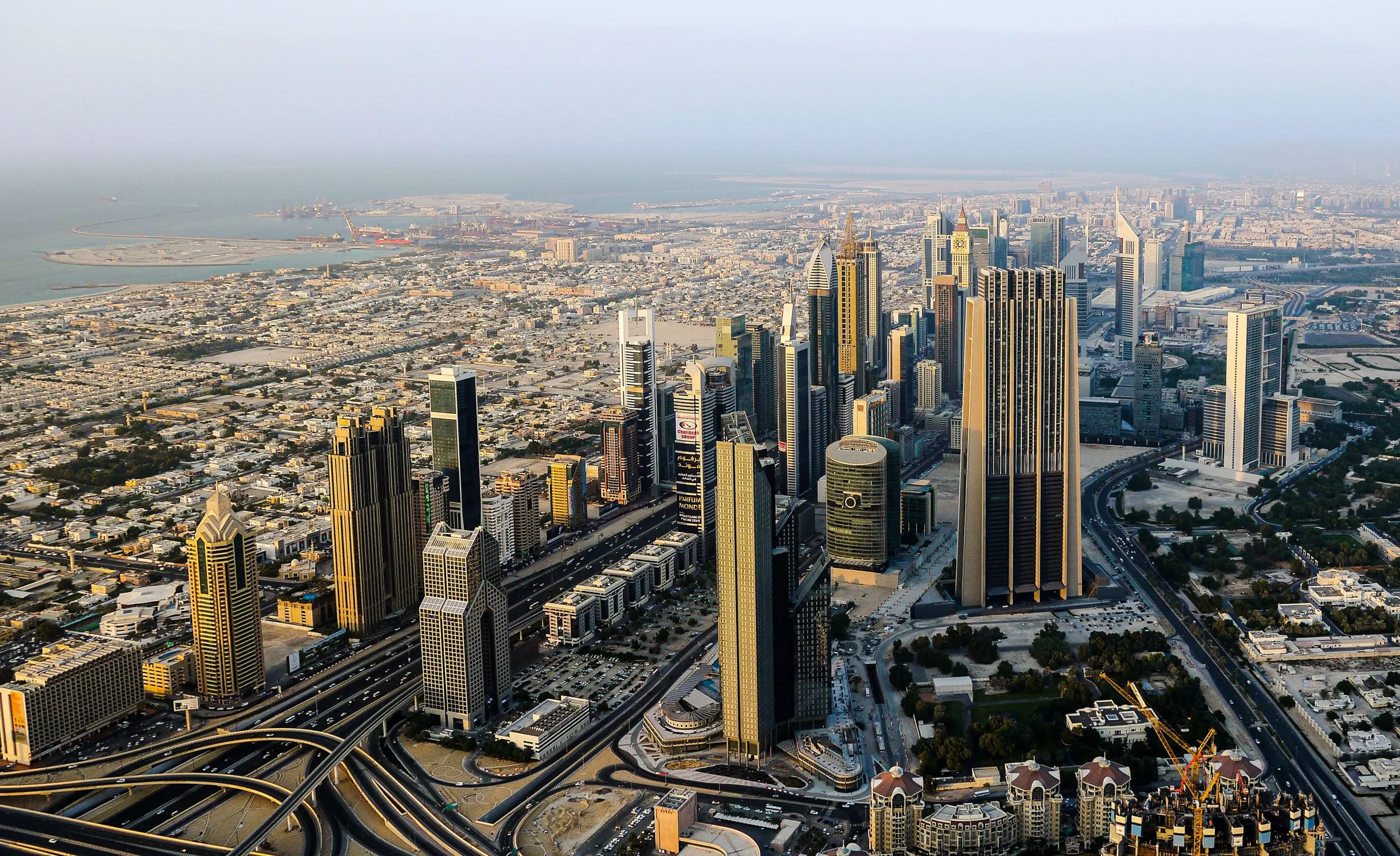
How many free zones are in Dubai and the UAE? Detailed guide

Setting up a new business in Dubai or somewhere else in the UAE? If you’re comparing free zones, the options can start blurring together pretty quickly.
With more than 20 in Dubai itself and over 45 in the UAE to choose from, plenty look good at first glance. But you’re not just comparing names and license prices. You’re choosing the setup your business will rely on once you start selling, hiring, banking, and growing.
An easily affordable free zone package can be the right move at first. But if the activity, facilities, visas, banking, or customer access don’t match how you operate, the “cheap” option can get expensive later.
In this guide, we’ll compare free zones in Dubai (and beyond), explain when they do and don’t make sense, and show you what to check before choosing one.
We’ll cover:
- Does setting up in a free zone actually make sense for your business?
- What makes one Dubai free zone a better fit than another?
- The most popular Dubai free zones for business setup
- Beyond Dubai: Other UAE free zones to compare
- What the business setup process actually looks like in Dubai
- If the “right” free zone setup still isn’t obvious…
- How Ziina helps new UAE businesses start accepting payments
Starting a business in the UAE? Ziina helps businesses accept payments through Tap to Pay, QR codes, payment links, digital invoices, and online checkout from one mobile app.
Does setting up in a free zone actually make sense for your business?
First things first: What is a free zone, really?
A free zone is a designated business area with its own licensing authority, setup process, and facilities. This can be a great fit for your business if you want a packaged license, visa options, workspace, or access to a specific business ecosystem.
But it’s not the only setup route. Depending on how your business will operate, mainland setup could make more sense.
So, the big question is...
Which setup route sounds closest to the way your business will actually operate?
| Where you register | Could be a good fit if… | Watch out for… |
|---|---|---|
Mainland | You’ll serve customers directly across Dubai or the wider UAE, especially through a physical location or local service model. | It can cost more, and you’ll usually have more to coordinate: premises, approvals, tenancy requirements, and license details. |
Dubai free zone | You want a packaged setup with licensing, visa options, workspace, or access to a specific business ecosystem. | The package has to match how you’ll actually operate. A cheaper option can get expensive if you later need mainland access, for example. |
Another UAE free zone | You’re flexible on location and another emirate offers a better fit for cost, warehousing, manufacturing, office space, or visas. | Dubai could still be better if your customers, partners, brand, or day-to-day operations are tied to the city. |
If a Dubai free zone still looks like the right fit, the next step is comparing what each one actually offers – because they’re not all built for the same kind of business.
What makes one Dubai free zone a better fit than another?
A lot of Dubai free zone packages look similar on paper, but the real differences show up in the details: what’s included, what kind of space you can use, or how banking support works.
Ask yourself:
1. Does this free zone make sense for the kind of business I’m setting up?
Most free zones support a wider range of businesses these days than they did in the past, so the differences aren’t always obvious from the outside.
Even so, some still carry more weight in certain industries because of their facilities, business community, partner network, or credibility with banks and suppliers.
Your customer base matters, too. A free zone can look like a strong fit on paper, but still limit how easily you can reach customers, take payments, deliver orders, or operate across Dubai.
Before choosing, be clear on where you’ll sell: inside the free zone, outside the UAE, or directly across mainland Dubai.
With all that in mind, the best free zone for a fintech company could look very different from the best fit for a logistics company, consultant, or eCommerce brand. We’ll compare some of the most popular Dubai free zones later in this guide.
2. What am I actually getting for the price quoted – and will this setup still work if my business continues to grow?
As a rough benchmark, a basic free zone eCommerce license might start around AED 6,000–7,000, while a Dubai free zone setup with a visa and flexi-desk is often closer to AED 15,000–20,000.
Note: These figures are indicative only and can vary by free zone and business activity — confirm current fees directly with the relevant authority.
But while free zone pricing can look simple when you’re comparing starting prices, the first number you see isn’t always the full first-year cost.
Remember that a cost-effective package can become the wrong package if it leaves out the approvals, premises, visas, or support your business needs before it can operate.
3. What space do I need to legally and practically run the business?
Space requirements can narrow your free zone options quickly, especially if your business needs more than a desk or basic office address.
A consultant might only want a flexi-desk or co-working setup, but an eCommerce brand storing stock locally would need warehousing or fulfillment support. It’s not so simple for salons or restaurants, either.
Before choosing a free zone, make sure its workspace options support the business you’re setting up now – and also the version you expect to grow into next.
4. Will I receive help with banking introductions or paperwork?
Even if your business license comes through quickly, your business bank account can be a very different story.
Banks usually want to understand what your business does, who owns it, where it operates, and what kind of transactions will move through the account. The more complex your business activity or ownership structure, the more back-and-forth you can expect.
The good news is that some free zones and setup partners offer banking introductions and help you prepare the documents banks will ask for. With others, you have to handle the banking part on your own.
The bank still makes the final call either way, but good support can take the guesswork out of the process and help you avoid delays when customers are ready to pay.
The most popular Dubai free zones for business setup
Dubai has more than 20 free zones, but these are some of the names you’ll come across most often when comparing options:
- DMCC: Commodities, trade, and general business setup
- JAFZA: Logistics, shipping, manufacturing, and heavy industry
- DIFC: Finance, fintech, and professional services
- Dubai CommerCity: eCommerce
- Dubai South: Logistics, aviation, trade, and operational infrastructure
- Meydan Free Zone: General business setup, consultants, and entrepreneurs
- DWTC Free Zone: Events, trade, and commercial activity
The differences can be quite practical. One free zone might make more sense if you need a warehouse near transport links, while another might be better for a fintech startup that cares more about regulation, credibility, and access to other financial businesses.
Beyond Dubai: Other UAE free zones to compare
There are over 45 free zones across the seven emirates of the UAE. If a Dubai address isn’t mission-critical for you, it could be worth zooming out to explore other locations that might work well for you.
Ras Al Khaimah, Sharjah, Abu Dhabi, and Ajman all have free zone options for different kinds of companies. For example, if you need office space, warehousing, manufacturing support, or a more cost-conscious setup, you could take a closer look at Ras Al Khaimah.
What the business setup process actually looks like in Dubai
Once you’ve chosen where to register, you’ll need to officially set up the business and get it ready to operate.
The process usually looks something like this:
- 1.Define your business activity.
- 2.Choose your legal structure.
- 3.Register your trade name and check whether you need extra approvals.
- 4.Secure the right address, desk, office, warehouse, or facility.
- 5.Apply for visas if needed.
- 6.Get your trade license.
- 7.Open your business bank account.
- 8.Choose how your business will accept payments.
Each step can change what you need to budget for, how long setup takes, and what documents you’ll need next.
For a deeper look at how those choices add up, read our guide to the real cost of setting up a business in Dubai.
If the “right” free zone setup still isn’t obvious…
By now, you can probably see why deciding between free zones can get complicated. A package can look like a good fit based on price, location, or name recognition, but still leave out something you might need later down the road.
That’s where a Dubai company formation specialist like Virtuzone can help. They can look at your business model first, then help you compare the license, jurisdiction, business activity, premises, visa options, and approval requirements that fit what you’re trying to build.
When the options all start to blur together, this kind of guidance can make the trade-offs much easier to see.
How Ziina helps new UAE businesses start accepting payments
Once your business is licensed, the next question is: how will customers pay you?
We built Ziina for exactly this part of the setup journey: we offer secure payment processing with a mobile-first experience for businesses, freelancers, and entrepreneurs across the region.
Here’s why UAE businesses choose Ziina to handle the payment side of things.
Get paid quickly and use your money sooner
Once your business is licensed, early sales can help cover the next wave of costs: stock, rent, staff, suppliers, marketing, or anything else you need to keep moving.
That’s why Ziina makes it easy to launch payments and use your money once it comes in.
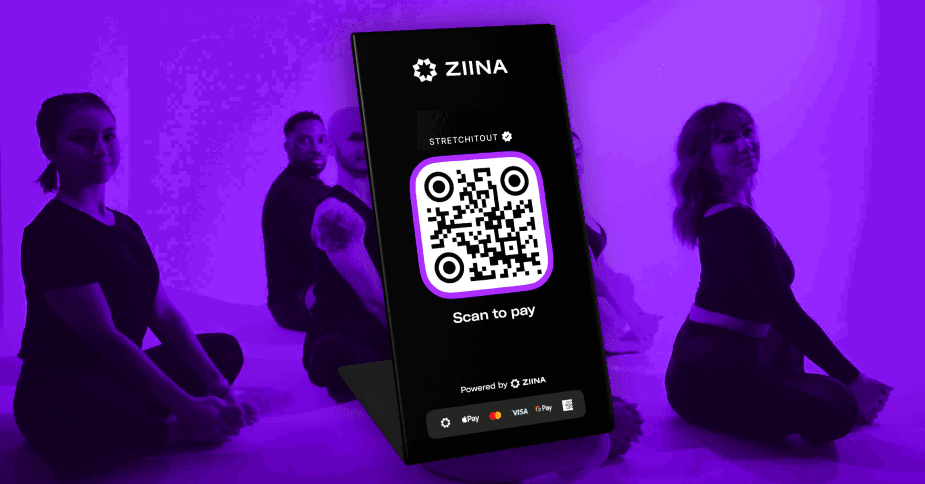
Stretch It Out is a good example of why speed matters at this stage. The Dubai wellness studio was getting ready to launch and needed payments live fast. Founder Dina Zoa had dealt with slow traditional payment providers before: “In my previous experience with traditional payment platforms, I faced endless delays. I needed something faster this time.”
With Ziina, Stretch It Out completed registration and verification within 48 hours, then started collecting payments through WhatsApp and QR codes right away: "Ziina enabled me to launch my business in record time. It’s fast, user-friendly, and local – a perfect solution for small businesses like mine," Dina said.
Once payments start coming in, you can cash out from your Ziina Wallet to a linked UAE bank account when needed.
Cashouts can be near-instant for eligible users. Otherwise, they typically take 1–2 days for amounts below AED 25,000 and 3–5 days for amounts above AED 25,000, subject to bank processing times and Ziina’s terms.
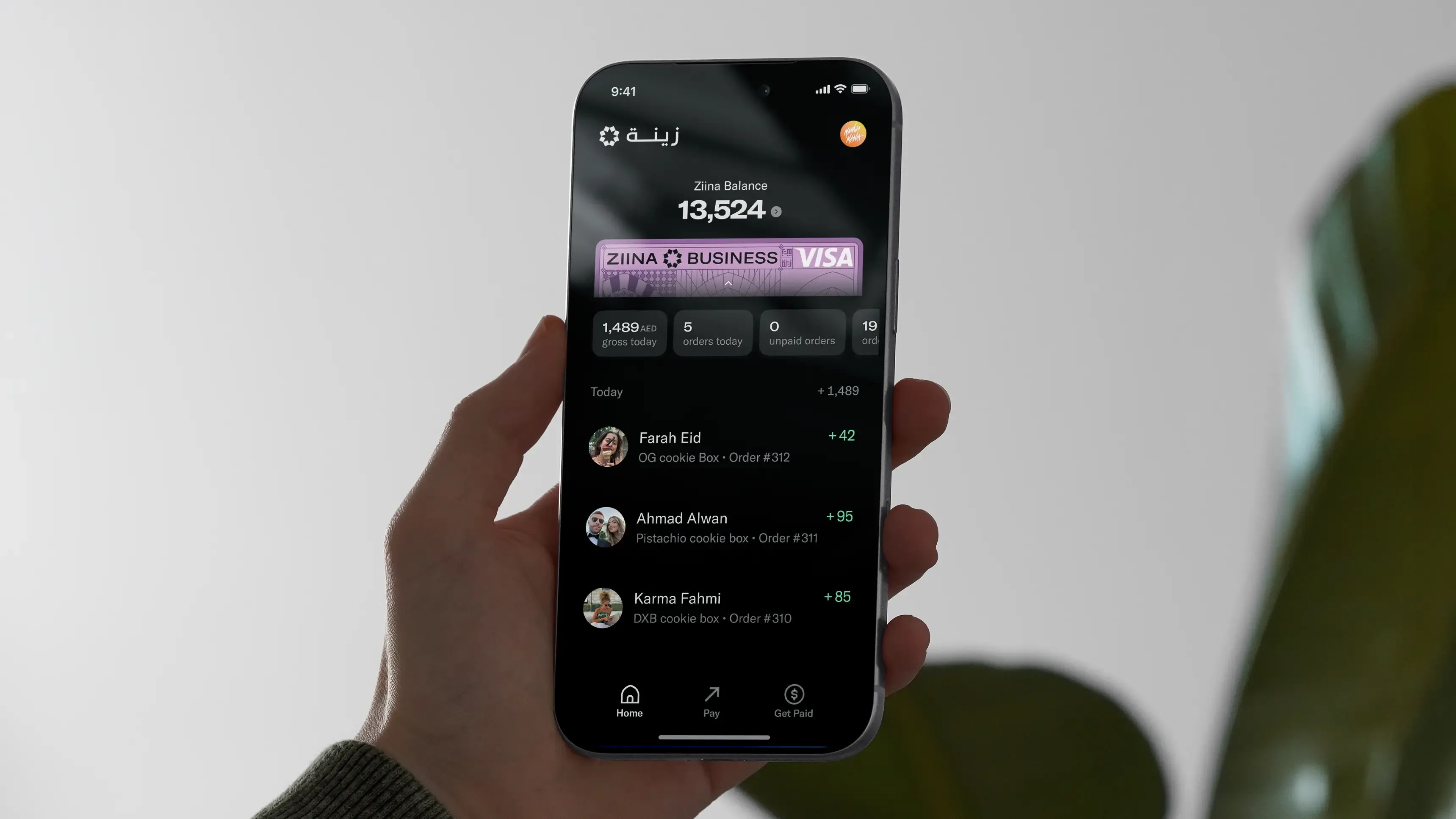
You can also spend straight from your wallet with the Visa-powered Ziina Card wherever Apple Pay, Google Pay, or contactless payments are accepted.
Ziina has no setup fees, monthly fees, or minimum balance requirements. Standard fees are 2.6% + AED 1 per transaction, plus applicable fees for international cards and/or non-AED currency. Check Ziina’s latest pricing for full details.
Accept payments across channels and track every sale in one app
Customers don’t always come through one neat sales channel, especially when you’ve just launched.
You might take bookings through social media, make some sales in person, send invoices for others, or add online checkout once your website is ready.
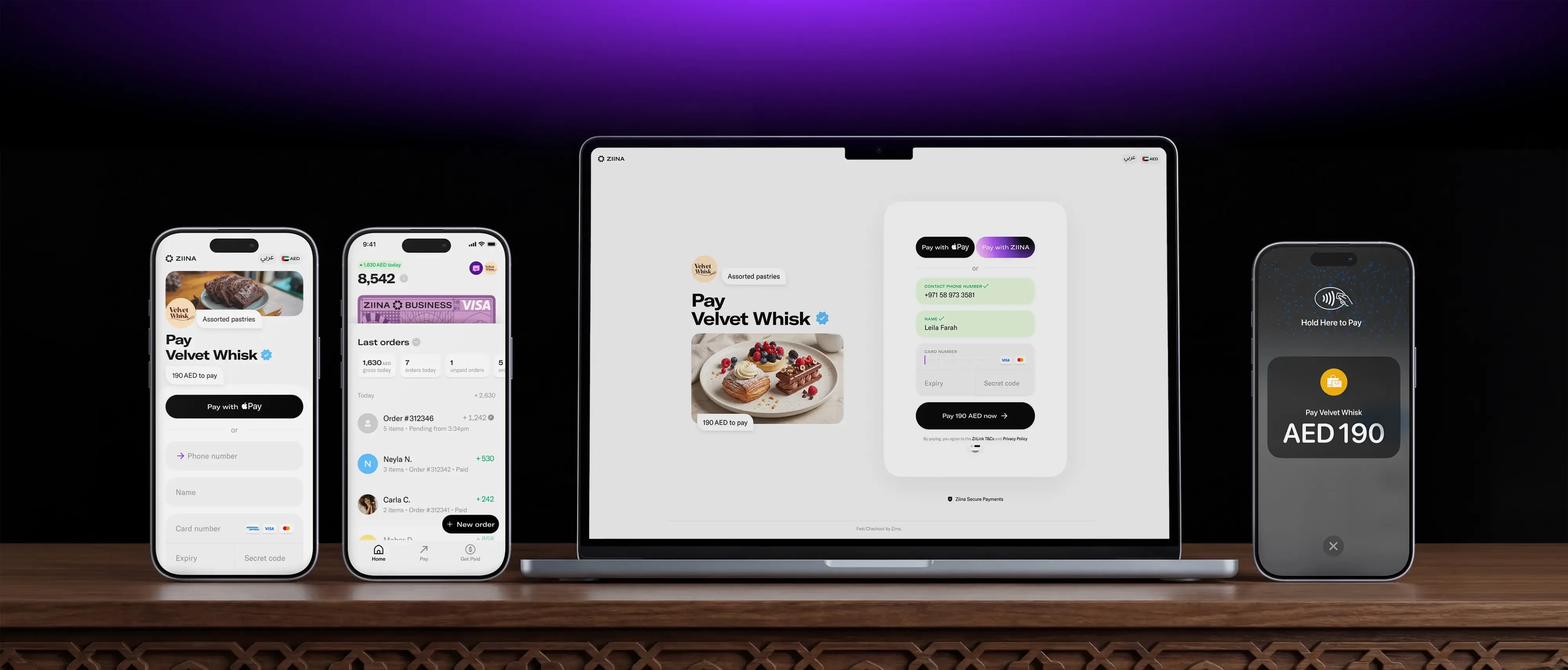
Ziina brings those payment options into one mobile app, so you can accept payments across more channels and track them in one place:
- Tap to Pay: Turn a compatible phone into a POS machine and accept in-person card payments without buying separate card machine hardware.
- QR codes: Let customers scan and pay at a counter, pop-up, event, delivery point, or service location.
- Ziina payment links: Share branded payment links through WhatsApp, Instagram, SMS, email, or other customer conversations.
- Digital invoices: Send customized payment requests and let customers pay directly by card, Apple Pay, or Google Pay.
- Online checkout: Add Ziina checkout to your website so customers can pay online.
All this means fewer dashboards to check, fewer payment screenshots to chase, and less manual reconciliation once sales start coming in.
Get local support and secure payments from day one
When payment questions come up, you want support that understands how UAE businesses actually operate.
Ziina is homegrown in the UAE, and we offer local support in English and Arabic with a goal to answer questions in 30 minutes or less during business hours.
Licensed by the Central Bank of the UAE, Ziina uses PCI-DSS certified technology for payment card information, along with security features like encryption, biometrics, and PIN codes to keep transactions secure and trustworthy for you and your customers.
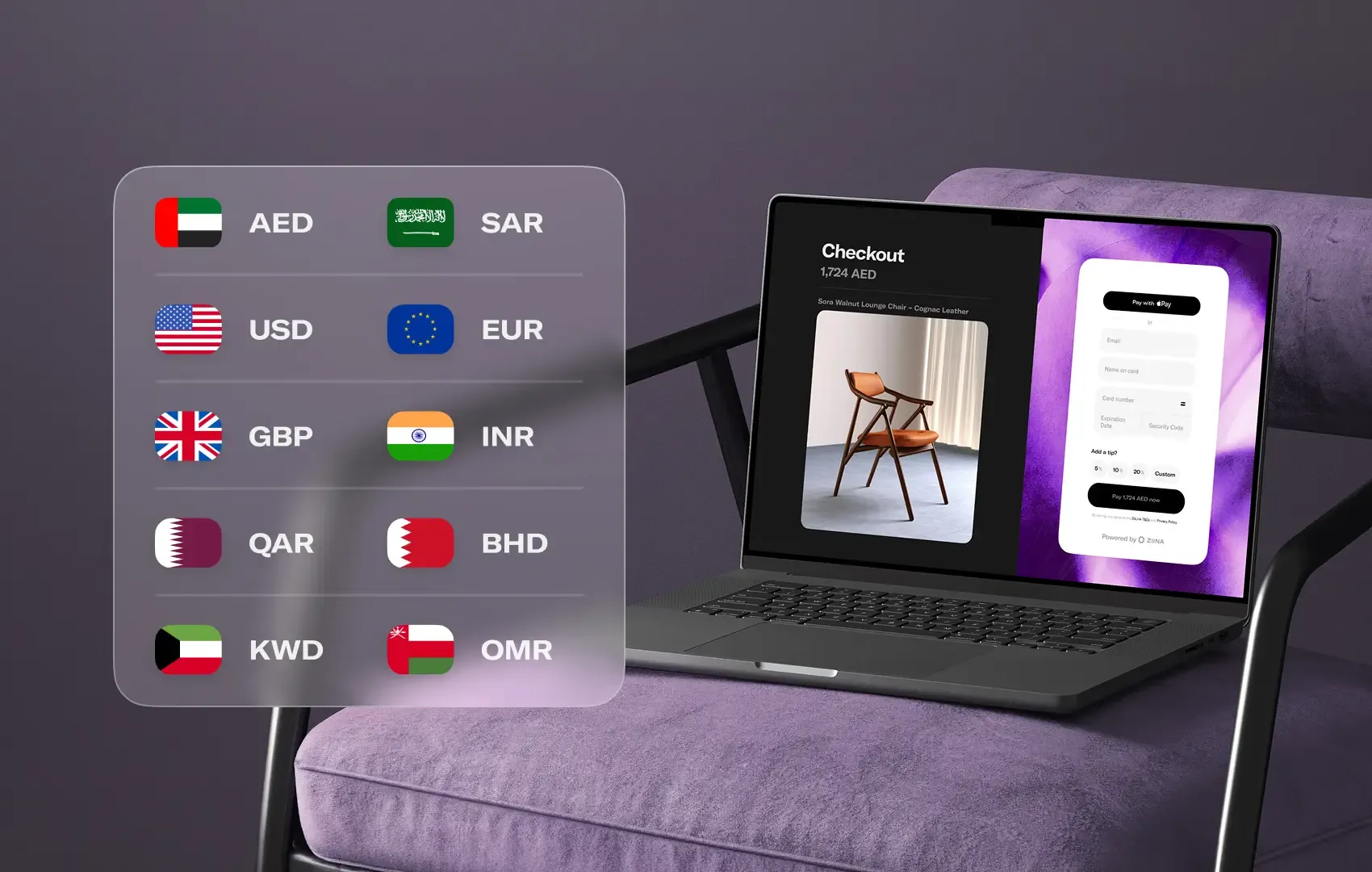
And if you sell to tourists or international customers, you can accept payments in multiple currencies. For app-generated payment links, customers can choose their preferred currency, while settlements to your Ziina Wallet are processed in AED at Visa’s exchange rate.
Get your business ready to sell with Ziina
Choosing the right free zone helps you build the right foundation.
Ziina helps with what comes next: accepting payments, tracking sales, and accessing your funds from one mobile app.
*Disclaimer: The information in this article is general and for informational purposes only. Business setup requirements, government fees, and licensing rules vary by jurisdiction, activity, and individual circumstances, and may change over time. Confirm current requirements with the relevant free zone authority. Ziina products and services are subject to eligibility, verification, applicable limits, and Ziina's terms and conditions. This article was published in September 2026.