
The real cost of setting up a business in Dubai: A practical guide

Products featured
If you’re looking into the cost of setting up a business in Dubai, you’re probably hoping to find a specific number.
Usually, the first number you’ll see is the cost of a trade license or business setup package. And that’s a good place to start – but it’s far from the full picture.
The real cost depends on your whole journey from registered to ready to sell, including how you’ll accept payments once customers are ready to buy. This means an affordable all-inclusive setup package can cost more than you expected once your ongoing operating costs enter the picture.
So, if you’re ready to look at the full cost of getting a business off the ground in Dubai, you’re in the right place. In this article, we’ll go over:
- How to set up a business in Dubai (and other UAE emirates)
- What’s the real cost of setting up a business in Dubai?
- How Ziina helps new businesses start accepting payments after setup
Starting a business in Dubai? Ziina helps UAE businesses accept payments through Tap to Pay, QR codes, payment links, digital invoices, and online checkout from one mobile app.
How to set up a business in Dubai (and other UAE emirates)
At first glance, setting up a business in Dubai can seem like quite a simple checklist: choose where to register, define what the company will do, get the right license, and so on.
But the choices you make at each step can send the final cost in very different directions.
Together, let’s break it down step by step so you can see what might affect your total.
1. Choose between the mainland and a free zone
Before you compare costs or start the registration process, you’ll need to decide where your business will be licensed: on the UAE mainland or in a free zone.
In simple terms:
Mainland companies can generally conduct business across the UAE, subject to their licensed activities and applicable approvals.
Free zone companies are registered within a designated business zone and typically benefit from simplified setup processes, packaged services, and industry-focused business communities.
A free zone often seems like the obvious choice because of its streamlined setup and business-friendly regulations. But the reality is less black-and-white than it used to be: mainland setup costs have become more competitive in recent years, and many mainland businesses can now be 100% foreign-owned (depending on their activities and applicable licensing requirements) — a benefit that was once exclusive to free zones.
So, the right route depends on how you actually plan to operate.
Mainland is often a good fit if you need to work directly with organizations across the UAE, secure commercial premises outside a free zone, or meet specific procurement and licensing requirements. It can also give you more flexibility if you’ll work closely with local schools, government entities, or customers across the UAE.
If you want a simpler all-in-one setup, a free zone could be a better option. Many free zones bundle your license, visa allocation, office space, and business support into a single package. Depending on the free zone, you could also benefit from being part of a community of businesses that operate in the same sector.
For example:
- If you trade internationally, a free zone built around commodities or import/export activity, like DMCC, might be the right fit.
- If you run a logistics or supply chain business, Dubai South might offer the warehousing, infrastructure, and transport access you need.
- If you're building an e-commerce business, Dubai CommerCity (DCC) offers an ecosystem designed specifically for online retailers.
- If you’re starting a fintech or financial services business, you may prefer an established financial hub with its own regulatory framework, like DIFC.
2. Define your business activity (it matters more than you think)
Your business activity determines your license and what your company is legally allowed to do. But it can also affect where you’re allowed to operate, which approvals you’ll need, and who you can do business with.
Choosing the right one from the start can save you a lot of time and money later on.
If you’re opening a food business, for example, the right activity depends on whether you’re running a restaurant, offering catering services, selling packaged products, or operating a delivery-only kitchen. Each one comes with its own licensing requirements and approvals.
Getting this step wrong can create a serious headache down the line: you might need additional approvals, a different license, or even changes to your setup before you can operate as planned.
That’s why it’s worth thinking about where you want to take your business next, not just what it does today.
3. Get the legal structure right from the start
Your legal structure decides who owns the business and what paperwork you’ll need for licensing and banking. You could set up as a sole establishment, limited liability company (LLC), civil company, branch, or a free zone company.
If you’re setting up as an individual founder, the process is often more straightforward because the ownership documents are tied to you personally. But if your ownership structure is more complex, there’s more paperwork involved.
Let's say a foreign company will own shares in your UAE business. In that case, you'll typically need to have corporate documents attested, legalized, and accepted locally before the setup can move forward. This can add time to the process.
Keep in mind: The ownership structure you choose can affect not only licensing, but also how quickly you can open a business bank account.
4. Register your trade name and get all the required approvals
You’ll need to register or reserve a trade name as part of the setup process. At the same time, it's worth checking whether your chosen business activity requires any additional approvals before your trade licence can be issued.
For some businesses (say, freelance writers or consultants), this step can be quite simple. For others, approvals can affect everything from where you're allowed to operate to whether a property is actually suitable for use.
Imagine an entrepreneur signing a long-term lease on a warehouse they plan to convert into a paddle club. Later, they discover that the property actually can’t be legally used for that purpose. Had they checked the relevant approvals and planning requirements first, they could have avoided a very costly mistake.
So, just because a license exists doesn’t mean your setup will work in practice. Premises, approvals, parking requirements, and local regulations can all affect if you can actually operate.
5. Secure a business address or facility – and prepare for the costs
Businesses in Dubai generally need an approved business address or workspace arrangement that meets the requirements of their relevant licensing authority.
If you’re opening a salon, restaurant, retail store, or warehouse-based business, you’ll need the right premises; if you're a freelancer or entrepreneur, a flexi-desk or co-working space package might be enough to meet the requirement.
A mainland business may need a tenancy contract registered through Ejari, depending on its premises and licensing requirements.
This is where registering in a free zone may be simpler, as many free zones include a desk, a shared office, or a private office as part of their setup packages.
Remember that this part can be one of the highest hidden costs of setting up a business in Dubai. While a low-cost license package will cover your registration and could also cover an office, it might not necessarily cover a retail unit or a warehouse.
6. Apply for visas if needed
Visa requirements can quickly drive up your setup cost, especially if you need to sponsor employees.
If you already hold a UAE Golden Visa, your own residency may not need to be sponsored through your company. Otherwise, visa costs can include owner or investor visas, employee visas, medical tests, Emirates ID, sponsorship-related fees, and visa quota or package costs.
So, think about your hiring plan before you choose a license package. The number of visas you need can affect how much cash you need to get set up and running.
7. Get your trade license to make your business official
A trade licence authorizes your business to carry out specified activities (subject to any additional regulatory, premises or sector-specific approvals).
The cost depends on the choices you’ve made so far. As a guide, founders often see license costs in the range of AED 10,000 to AED 50,000. A very basic free zone eCommerce license may start lower.
You can also use a calculator tool from a company formation provider like Virtuzone to estimate your general trading license cost and see how details like activity, shareholders, UAE residence visas, office type, and jurisdiction affect the total.
Note: These figures are indicative only and were reviewed as of July 2026. Actual costs vary by jurisdiction, activity, legal structure, visa requirements, premises, and additional approvals. Businesses should obtain a current quote from the relevant licensing authority or formation provider.
8. Open a business bank account
Getting your trade license isn’t the finish line. The next hurdle is opening a business bank account. In fact, one of the most common questions founders ask is: “How long will it take to open a bank account?”
And the answer is… it depends.
While some businesses can open an account within a few weeks, others may face a much longer compliance process depending on their industry, shareholders, and risk profile.
Banks will want to understand who owns the company, what it does, where it operates, and what kind of transactions are likely to flow through the account. The more complex your ownership structure or business activity, the more questions you can expect during the review process.
Read more: When and how to open a UAE business bank account
This means you could get your trade license issued very quickly, but end up waiting for your bank account to get approved – and all the while, customers are ready to pay.
This brings us to the final step…
9. Choose how your business will accept payments
You’re ready to sell. But there’s just one issue: you still need to figure out a way to accept payments.
In many cases, you’ll need a business bank account to get signed up with a payment service provider (PSP).
Eligibility and account requirements vary between payment providers, however. Depending on the provider’s terms and conditions, product, and level of verification completed, some businesses could be able to start accepting payments while their business banking arrangements are being finalized.
Payment setup is a large part of your operational costs. The provider you choose can affect what you pay upfront, transaction and currency conversion fees, and how much admin it takes to track what’s coming in.
The last point especially is often underestimated. Let’s say you sell on Instagram via payment links and decide to launch a website with an online checkout. Then you start selling at pop-up events. Eventually, you might even want to open a mortar-and-brick store.
All these channels come with different payment acceptance solutions: payment links, QR codes, POS machines or Tap to Pay, a payment gateway…
If all the sales channels are scattered across providers, you’re adding a lot of manual reconciliation effort and higher costs. Some providers unify them all in one solution, which could simplify the process. This means you need to make a well-informed decision and partner with the right payment platform from the get-go.
In general, this is where your real business costs come into view: you’re no longer pricing the license alone, but what it takes to get from licensed to operational.
So, what’s the real cost of setting up a business in Dubai?
Let’s split the real cost of setting up a business in Dubai into three parts: formation costs, operational setup costs, and ongoing operating costs.
Formation costs are usually the easiest to estimate because you’ll see concrete numbers in license packages.
To give you a sense of the numbers, a basic free zone eCommerce license can start around AED 6,000 to AED 7,000, while a Dubai free zone setup with a visa and flexi-desk is often closer to AED 15,000–AED 20,000. Mainland setups often start higher – upwards from AED 30,000.
The harder part is pricing what it takes to operate after formation. Those costs are harder to capture in a setup quote because they depend on how the business will sell, get paid, access funds, and keep records once it starts trading.
Tax obligations are an example of costs that may not show up in the initial setup package. Corporate tax applies at 0% on taxable income up to AED 375,000 and 9% above that amount. VAT also enters the picture if your taxable supplies and imports exceed AED 375,000.
(Note: Tax treatment depends on individual circumstances, and businesses should obtain professional tax advice where necessary. For more information, read our article on corporate tax registration in the UAE.)
Payment setup is another matter. On top of what you might pay for a traditional card machine (unless you opt for less expensive Tap to Pay), you’ll also need to account for transaction fees, payout timing, and the admin that comes with accepting payments once sales start coming in.
As you can see, a lot of factors feed into the overall cost of setting up a Dubai business.
To help you estimate your own total, here’s a quick overview table:
| Cost category | What it covers | What it helps you understand |
|---|---|---|
Formation costs | Trade license fees, trade name registration, legal structure, approvals, office space requirements, visas if included | What it takes to legally create the business |
Operational and setup costs | Business or corporate bank account, payment setup, accounting setup, tax readiness, software, admin tools, equipment, (potential) website, inventory | What it takes to start running a business, selling products or services, and managing funds |
Ongoing operating costs | Trade license renewal fees, visa, and office or tenancy renewals, transaction and other PSP fees, reconciliation effort, bookkeeping, VAT and corporate tax filings where applicable | How much you will continue to spend once operations begin |
The cost that could save you money in the long run: A Dubai company formation specialist
If all of this feels like a lot to navigate… that’s because it is. Many founders actually work with a Dubai company formation specialist like Virtuzone for exactly this reason.
Having someone guide you through the process can make it much easier to compare your options, choose the right licence and business activity, and avoid common setup mistakes.
And while that professional support does come at an additional cost, it can help you get things right the first time – and that could save you time, money, and frustration later on in the process.
Read Virtuzone’s full guide on how to start a business in Dubai.
How Ziina helps new businesses start accepting payments quickly
Now that you know how to officially form a business in Dubai, your next question might be: “Which payment provider can help me accept payments quickly, manage multi-channel sales in one place, and keep my payment costs easy to plan around?”
We built Ziina for this part of the setup journey.
We’re a payment platform licensed by the Central Bank of the UAE. We combine secure payment processing with a mobile-first experience built for businesses, freelancers, and entrepreneurs across the region.
Here’s why UAE businesses choose Ziina to handle the payment side of things:
Start accepting and managing payments in AED
Getting licensed is a major milestone, but your business bank account approvals might be on a very different timeline.
Ziina offers payment accounts designed to help eligible UAE businesses and professionals accept and manage payments. You can open a local AED account quickly, start accepting payments, and manage incoming funds through your Ziina wallet. No opening fees, monthly fees, or minimum balance required.
(Note: Account features, limits, and documentation requirements depend on the account type, business activity, and level of verification completed.)
Our standard fees are 2.6% + 1 AED per transaction, plus a 1.5% fee for international cards and/or non-AED currency. Check Ziina’s pricing page for the latest terms.
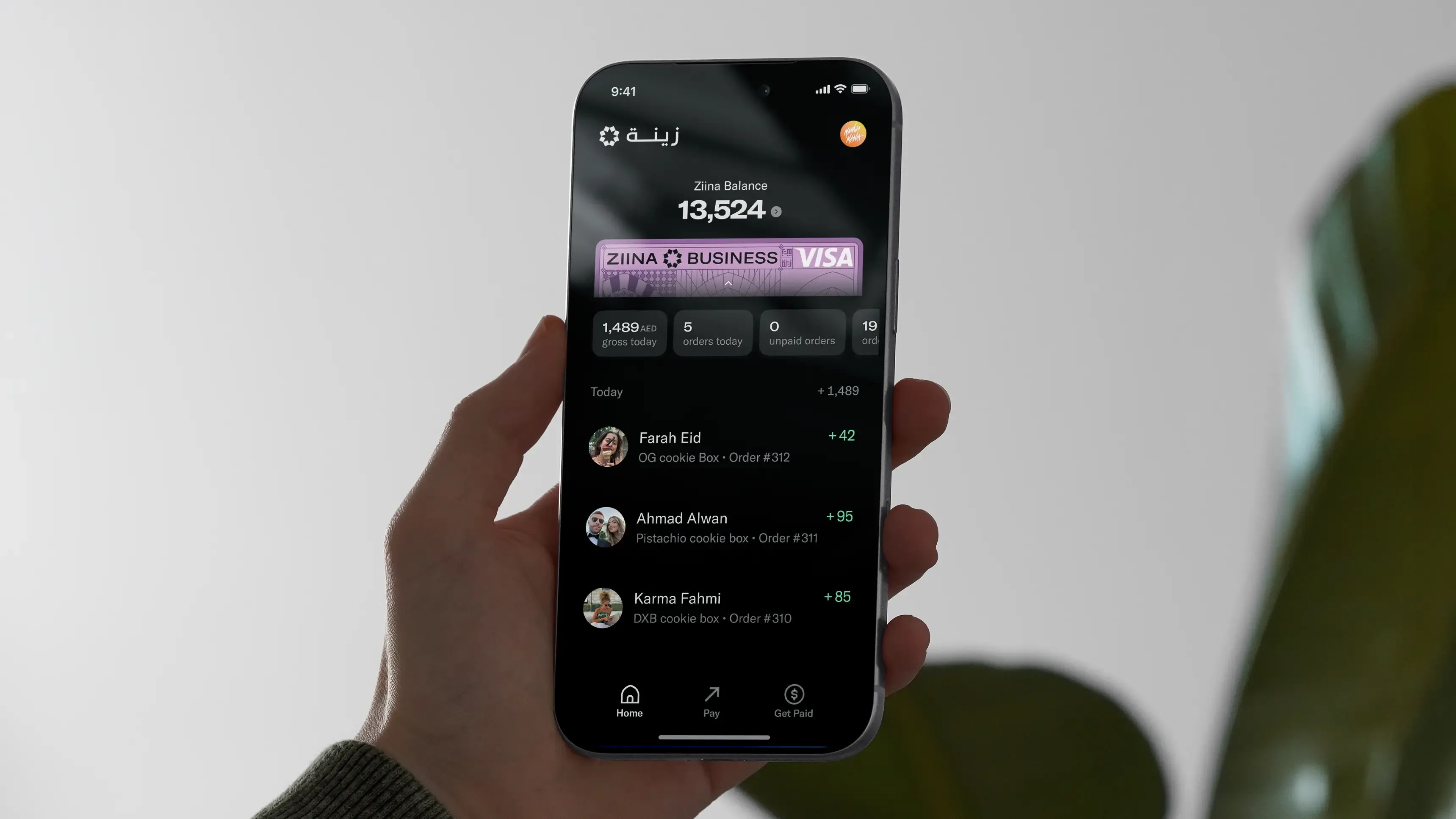
Once payments start coming in, funds land in your Ziina wallet. From there, you can start spending with your virtual Ziina business card anywhere Apple Pay, Google Pay, or contactless payments are accepted, or transfer funds to a linked UAE bank account.
Cashouts typically take 1–2 business days for amounts below AED 25,000 and 3–5 business days for amounts above AED 25,000, subject to bank processing times. Eligible users may also have access to instant payouts.
Eligible businesses can get started with basic verification, while others may need to provide additional documentation depending on their activity and account requirements. Keep in mind that you’ll still need to make sure you have the right trade license, permits, tax registrations, and approvals for your business activities.
Accept payments across different channels and track all sales from one app
As you start selling, payments might come from more than one place: a customer might pay at a counter, through WhatsApp, after receiving an invoice, or through your website once you add online checkout.
Ziina brings those payment options into one mobile app, so you can accept payments across more channels and track them in one place:
- Payment gateway: Add Ziina checkout to your website so customers can pay online.
- Tap to Pay: Turn a compatible phone into a POS machine and accept in-person card payments without buying separate card machine hardware.
- QR codes: Let customers scan and pay at a counter, pop-up, event, delivery point, or service location.
- Payment links: Share branded payment links through WhatsApp, Instagram, SMS, email, or other channels.
- Digital invoices: Send customized payment requests and let customers pay directly by card, Apple Pay, or Google Pay.
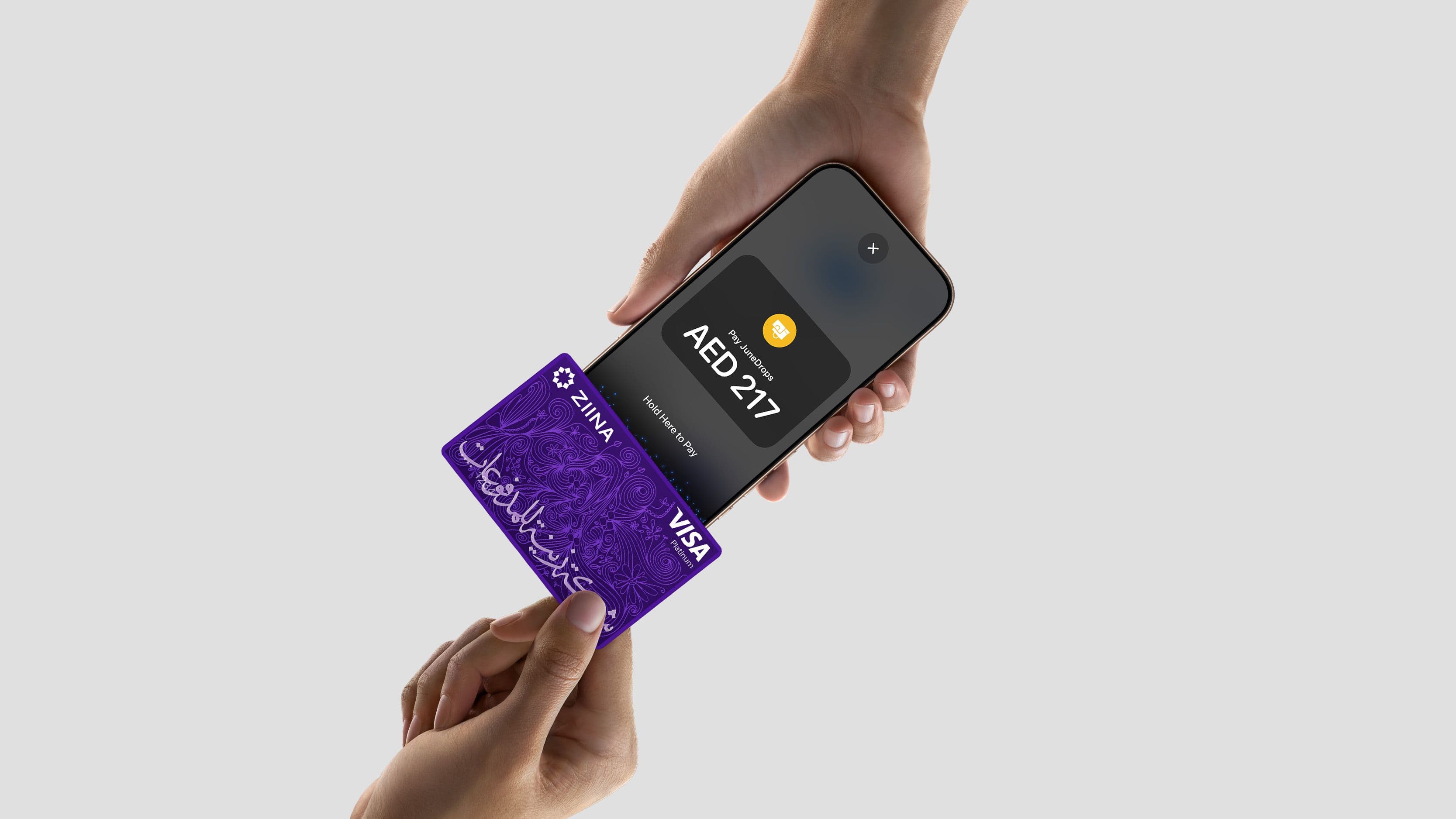
That means fewer dashboards to check, fewer payment screenshots to chase, and less manual reconciliation once sales start coming in.
Let’s take The Expat Group, a Dubai-based HVAC, electrical, and plumbing business, as an example. Before Ziina, the team relied on bank transfers and in-person card machine payments, and some customers still took days or weeks to pay.
The Expat Group started using Ziina to send payment links through WhatsApp. Customers could pay with Apple Pay or Google Pay, and the team could access cashouts faster.
As Paul Haddow, Managing Partner at The Expat Group, said, “Before Ziina, it was difficult for us to gauge how much our customers appreciated a convenient way to pay. We’d get requests for payment links all the time. It was almost like our customers were saying, ‘Help us pay you faster.’”
Today, 75% of customers who receive a Ziina payment link pay instantly, reducing delayed payments by 75% overall.

Get local support from a secure payment platform licensed by the Central Bank of the UAE
Once payments become part of your daily operations, you need more than a way to process transactions. You need a payment setup that’s secure, easy to manage, and backed by support that understands the UAE market.
Ziina is homegrown in the UAE and offers local support in English and Arabic, with a goal to answer questions quickly.
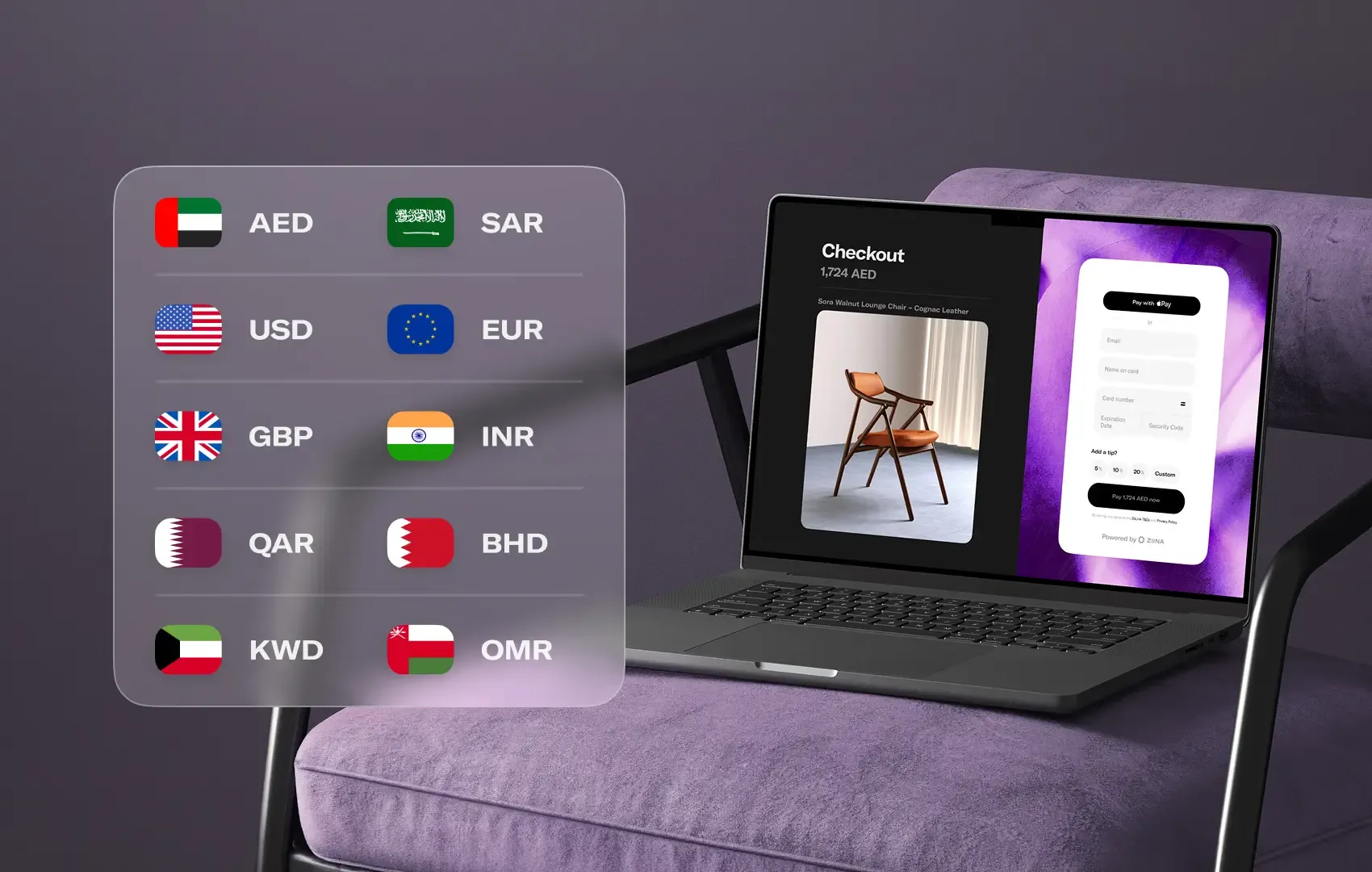
For businesses that sell to international customers, Ziina supports payments in up to 10 currencies, including SAR, USD, EUR, and GBP.
(Note: Full currency availability, conversion rates and applicable fees are subject to Ziina’s latest terms and pricing.)
Final notes
The real cost of setting up a business in Dubai doesn’t stop at the license. It includes choosing your premises, opening a business bank account, getting extra guidance where needed, and picking the right payment processor.
Of course, accepting payments is a big part of that picture. With Ziina, you can manage your payment setup and track all sales from one mobile app. As a result, you can start selling with fewer upfront costs and less admin.
Disclaimer: The information in this article is general and for informational purposes only. Business setup requirements, government fees, tax treatment, and licensing rules may vary depending on the jurisdiction, activity, and individual circumstances, and may change over time. Businesses should confirm current requirements with the relevant authority and obtain professional legal, tax or business-formation advice where appropriate. Ziina products and services remain subject to eligibility, successful verification, applicable limits, and Ziina’s terms and conditions.